

Get everything you need from a modern CDN — from effortless scale and built-in security to programmable control and full visibility.




All blog posts
Page 4 of 62

Bot Defense is Table Stakes. Machine Traffic Requires a Business Strategy
Businesses need more than bot blocking as AI traffic surges. Learn how to distinguish valuable AI interactions from risk and build a machine traffic strategy.

Python SDK Beta: How the Language of AI Runs Faster and Safer with Fastly
Bring your Python code and AI agents to the edge with Fastly's Python SDK Beta. Get maximum speed, security, and standard CPython compatibility.

Give AI Agents the Markdown They Actually Want
AI crawlers prefer Markdown over HTML. Learn how to use Fastly Compute to serve clean, cached Markdown to AI agents without changing your origin.

How to Configure Local Logging for an On-Prem Next-Gen WAF Agent
Learn how to configure local logging for Fastly NGWAF on-prem agents using Docker, environment variables, and real-time log tailing.

Accountability Without Control Is Breaking Security Leadership
CISOs are being held accountable for breaches without gaining more control over the systems and decisions that shape risk. Fastly CISO Marshall Erwin explains why AI is widening the gap between accountability, visibility, and enforcement.

Fastly Joins the Agentic AI Foundation (AAIF) to Guide Edge AI Interoperability
Fastly joins AAIF to shape open standards for Edge AI interoperability. Get secure, sub-millisecond execution for agentic sub-tasks with our MCP Server.

The E-commerce Industry in the AI Era: Has the Agentic Flood Hit?
AI bots are flooding e-commerce. Discover how to shift your bot strategy from blocking to strategic governance, visibility, and monetization.
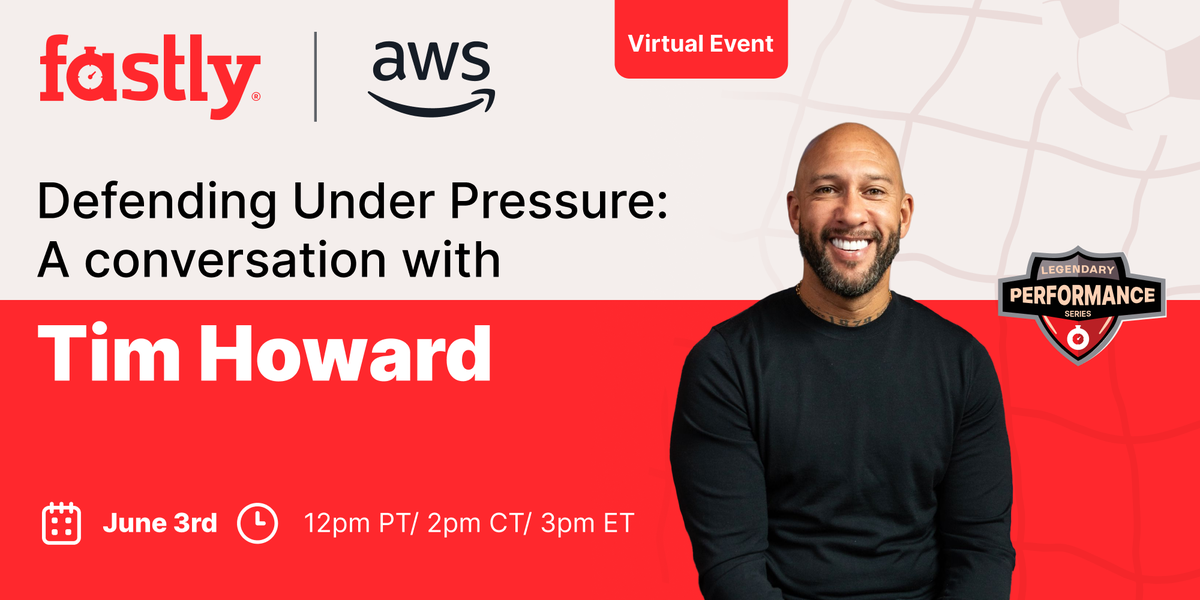
No Margin for Error: What the FIFA World Cup Teaches Us About Performance at the Edge
What do World Cup goalkeeping and live streaming have in common? Join Fastly, AWS, and Tim Howard to explore performance, resilience, and preparation under pressure.

Why iGaming Infrastructure is Breaking and What Comes Next
Real-time betting demands ultra-low latency. Learn how edge infrastructure helps iGaming platforms scale securely and perform under pressure.

The Publishing Industry in the AI Era: Why Bot Strategy is Now a Business Strategy
Nearly half of internet traffic is now bots. See how AI is forcing publishers to rethink traffic, visibility, and the future of their business.

Bad Performance Kills SaaS/PaaS Growth — Why Your CDN Matters
Boost SaaS and PaaS performance with the right CDN. Learn how to improve speed, security, and scalability while supporting product-led growth with Fastly.

Why your code is safe from Copy Fail on Fastly Compute
Copy Fail (CVE-2026-31431) puts shared Linux environments at risk—but Fastly Compute’s Wasm-based architecture avoids the vulnerability entirely. Here’s how.

Myth or Marvel: Claude Mythos and What it Means for Security
Learn more about the Claude Mythos AI announcement and its true meaning for security. Find out why runtime protection is now critical against machine-speed vulnerability discovery.

Introducing Compliance Audit Reports
Streamline your audits with Fastly’s new Compliance Audit Reports. Download evidence for SOC2, GDPR, HIPAA, PCI, and ISO 27001.
Supporting Google Private AI Compute with Privacy-Preserving Edge Infrastructure
Learn how Fastly's privacy-preserving edge infrastructure supports Google Private AI Compute, enabling private and secure access to powerful Gemini models.
Adapting in the Era of AI
Stop malicious bots and control AI crawlers from scraping your IP. Fastly's ContentGuard gives you the control and visibility needed in the era of AI.

Nearly Half the Web Isn’t Human: Inside Fastly’s Threat Insight Report
Fastly's Threat Insights Report reveals 49% of web traffic is bots, 99% of which are unwanted. Learn how to evolve your bot strategy to manage security and costs.
Media over QUIC: Can Streaming Finally Have Both Scale and Low Latency?
Media over QUIC (MoQ) aims to unify low latency and scale by streaming real-time media over QUIC, replacing segments with a more efficient delivery model.